

Tenochtitlan, the Lost City Beneath Mexico City
Tenochtitlan, the Lost City Beneath Mexico City
Tenochtitlan, the lost city beneath Mexico City, was no primitive settlement waiting for civilization. When Hernán Cortés and his men crested the mountains of the Valley of Mexico in 1519, they saw something that shattered their understanding of the world entirely.
In fact, what they found was cleaner, larger, and more organized than any city in Europe.
A City Built on Water
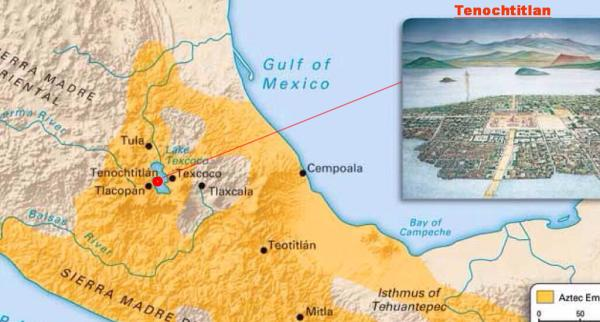
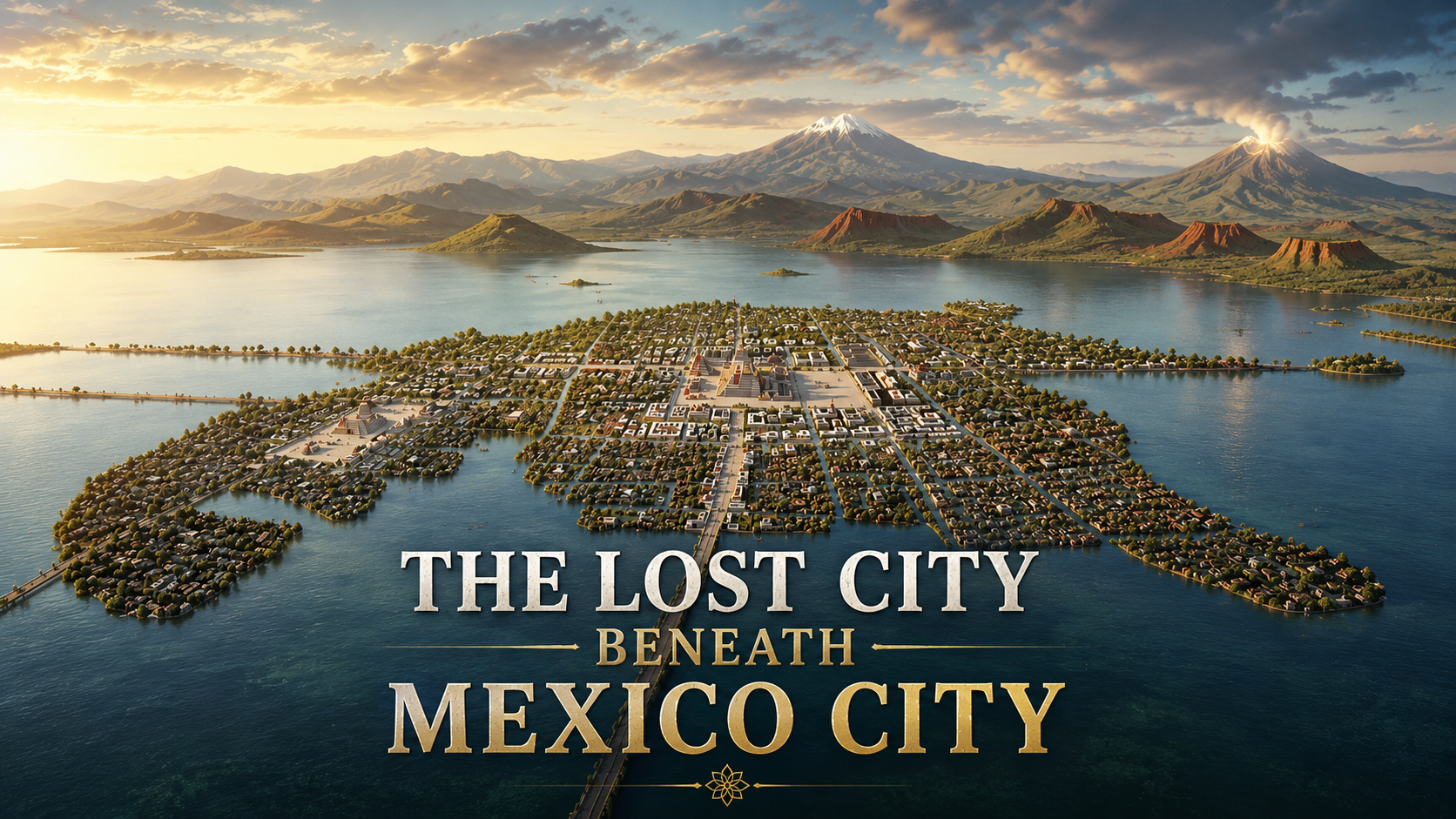
The Mexica built Tenochtitlan on an island in the middle of Lake Texcoco and connected it to the mainland with massive engineered causeways. The city housed between 200,000 and 300,000 people, so it was larger than Paris, London, and Rome combined at the time.
However, the true genius of the city was not its size. The Mexica mastered water in ways that still impress engineers today.
They engineered chinampas, floating gardens made from layers of mud, vegetation, and reeds anchored by willow trees. Because these gardens sat directly on fertile lake water, they could produce up to seven crops a year. The system turned a brackish lake into one of the most productive agricultural engines in human history.
To solve the problem of salty lake water, the Mexica also built a dual-channel aqueduct from Chapultepec that carried fresh spring water directly into the city center. As a result, Tenochtitlan had a clean, sustainable water system that Europe would not match for centuries.
The market at Tlatelolco, Tenochtitlan’s sister city, left Cortés speechless. He described it as larger than Salamanca, where more than sixty thousand people bought and sold goods in a system of organization and cleanliness entirely foreign to the Conquistadors.
The Erasure
After the siege and conquest of 1521, the Spanish tore Tenochtitlan apart stone by stone. They used pyramid blocks as foundation material for their own buildings and filled the canals to create streets. Therefore, Mexico City rose directly on top of the ruins, replacing a hydraulic civilization with a dusty European grid that never understood the water beneath it.
The consequences spread immediately. Without the Aztec hydraulic system managing the lake, chronic flooding began almost at once. Furthermore, the drained lakebed soil remains unstable today, and Mexico City continues to sink because of that decision five centuries later.
What Lies Beneath
In 1978, electrical workers digging a trench near the Zócalo struck a massive stone disk depicting the goddess Coyolxauhqui. That single discovery led archaeologists to the Templo Mayor, the central twin pyramid of Tenochtitlan, buried directly beside the Metropolitan Cathedral.
Below the surface, researchers found seven distinct layers of construction. The Aztecs rebuilt and expanded the same monument across centuries, so each generation left its mark on the one below. Additionally, less than one percent of Tenochtitlan has been excavated. The market of Tlatelolco, entire neighborhoods, botanical gardens, and the full canal network still rest just a few meters beneath the feet of 22 million people.
KT, Your Insider Guide
When you walk through the Centro Histórico, you are not walking through a city. You are walking on top of its ghost. Every sinkhole near the Zócalo is the brackish lake below trying to reclaim what the Spanish took. They did not simply conquer a people. They deleted an ecosystem. The greatest library in Mexico, therefore, is the ground beneath our feet.
Why This Matters from Baja
Mexico layers its history everywhere you look, and Baja California Sur is no exception. The resilience, the deep roots, and the refusal to disappear are threads that run from the Valley of Mexico all the way to the tip of the peninsula. So when you understand where Mexico came from, Los Cabos feels like more than a destination.
It feels like a place worth belonging to.
Explore the culture and history behind Los Cabos at cabosfinest.com