

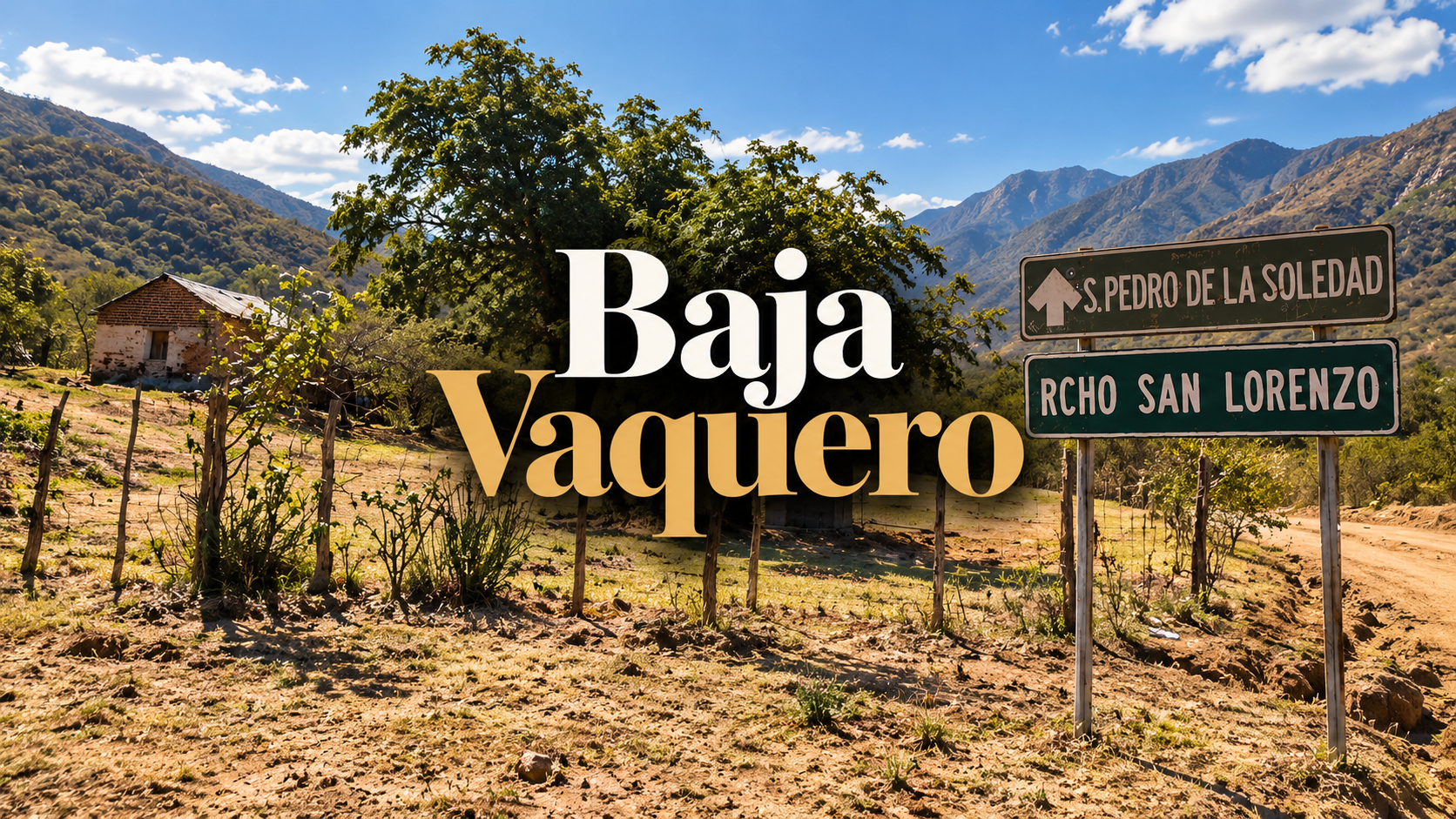
Baja Vaquero: The Original Cowboy Story
For more than 300 years, ranchero families lived in isolation across the Sierra de la Laguna and the Sierra de San Francisco. Their world was shaped by self-sufficiency and by a landscape that gave up water and grazing land grudgingly. Most visitors to Los Cabos never hear this story. That is a mistake.
Who Was the Baja Vaquero and Where Did the Cowboy Come From?
The Baja vaquero is the original cowboy. The tradition dates to the Spanish arrival and later spread north into what became the American West. The tools, the vocabulary, and the techniques that defined frontier life all traveled north with vaqueros from the Californias. Rodeo, lasso, corral: these are not English words. They came from here.
Daily life bore little resemblance to the Hollywood gunslinger. The Baja vaquero’s work was survival and craft. Mules, not horses, carried them across rocky cliffs, sure-footed where a horse would falter. A heavy leather jacket called a cuera protected against the thorns of cactus and mesquite that thickened the terrain they worked. Their job was managing semi-wild cattle roaming open range, tracking and roping animals through dense, thorny country that punished any lapse in skill.
What Was Daily Life Like on a Baja Ranchero?
Men managed the livestock, cattle, goats, and mules, worked leather into saddles, chaps, and shoes, and located water sources. Days away in the mountains, camping near the herds, were routine. Women ran households built from adobe, without electricity, and carried the responsibilities that kept a family fed and connected: making cheese, a primary trade good, processing meat, tending large vegetable gardens, raising children, and holding together the religious and social traditions that gave ranch life its rhythm. Children learned by doing. Boys began riding and roping around age four or five. Girls learned food preservation, cheese-making, and embroidery, skills passed hand to hand, not taught from a book.
Is the Ranchero Way of Life Ending?
The transformation of Cabo San Lucas and San José del Cabo from fishing villages into international resort towns reshaped this social fabric quickly, within a generation or two. Younger rancheros are leaving in numbers. A steady paycheck, air conditioning, and hotel or construction work compete against the physical uncertainty of ranch labor, and town work is winning. Many ranches now hold only the older generation. When those grandparents and parents pass, there is often no one left to run the operation, and homesteads that have stood for centuries go quiet.
Some families have adapted by pivoting to eco-tourism. Instead of selling cattle alone, they now lead mule treks, hiking tours, and serve traditional meals to visitors. Furthermore, prolonged drought has made cattle raising harder, and the exodus of younger family members has thinned the ranks of those who might carry the work forward. The tradition is fading, but it has not ended. It is transitioning.
What Is the Vaquero Museum in El Triunfo?
The Museo del Vaquero de las Californias, known as MUVACA, sits in the historic mining town of El Triunfo. It was built to address exactly this loss of memory. The museum tells the 300-year history of the California vaquero and makes a specific claim worth sitting with: American cowboy culture originated here. Multimedia exhibits trace family lineages, display leather tools and cuera jackets, and present oral histories recorded from rancheros who remain. The result validates what these families have said quietly for generations, that their story is not a regional footnote but a foundational chapter of North American history.
What Is Rancho Cacachilas Doing With This Knowledge Today?
About an hour’s drive from El Triunfo, Rancho Cacachilas is putting the museum’s lessons back into the ground. Both belong to Alumbra Innovaciones, Christy Walton’s alliance of sustainable ventures in Baja California Sur. The museum tells the vaquero story. The ranch is living it forward.
Florent Gomis, a French ecologist who came to study Baja’s desert climates, directs sustainability at Rancho Cacachilas. His work centers on transhumance, the seasonal movement of livestock that Spanish settlers brought to the region and that vaqueros once practiced by necessity. The results have been measurable: land that once supported a single cow per unit is approaching capacity for four, and the need for supplemental feed has dropped as natural vegetation returns. More vegetation also cools the land surface, which in turn supports rainfall, reinforcing a cycle that overgrazing had broken.
KT Insider Note
The ranchero story is often told as nostalgia. It is more accurate as a lineage. The vocabulary of the American cowboy came from these mountains first. Moreover, an hour past the museum that tells that story, the same knowledge is back at work on the land. If you have time for one day trip beyond the resort corridor, El Triunfo and Rancho Cacachilas together make the strongest case in Baja California Sur that the past is not finished yet.
KT, Your Insider Guide, Cabos Finest Real Estate , Facebook